______ END ______
 |
| MIL-STD-31000B - DOD Standard Practice Technical Data Packages | Reference | 2018 |
| Term: Associated List |  |
| Definition: A tabulation of engineering information pertaining to an item depicted on an engineering drawing or by a set of drawings, e.g., application list, data list, index list, parts list, and wire list. |
| Term: Attribute | |
| Definition: A dimension, tolerance, note, text, or symbol required to complete the product definition or feature of the product that is not visible but available upon interrogation of the annotated model. | 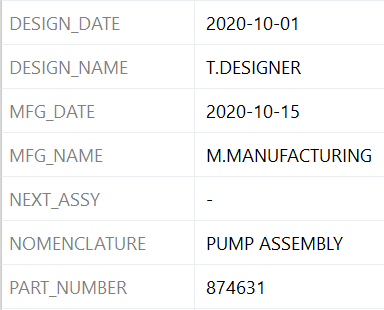 |
| Term: Company Standard | |
| Definition: A document produced by a company that establishes engineering and technical limitations and applications for items, materials, processes, methods, designs, and engineering practices unique to that particular company. |
| Definition: A process that is the only known manufacturing method that will result in the production of an acceptable item. |
| Term: Current Design Activity | CDA |
|
| Definition: The design activity currently responsible for the design of an item. This may be the original design activity or a design activity to which the design responsibility has been transferred. |
| Term: Derivative | |
| Definition: Data duplicated or extracted from the original. A copy of a derivative is also a derivative. |
| Definition: Viewing of 3D models for design reviews, cost estimating by suppliers, and other applications in which the fidelity of appearance but not a high degree of manufacturing accuracy are required. Once data has been translated to a form for visualization, it should no longer be used for manufacturing. Visualization formats include 3D PDF, Siemens PLM Software JT, Parametric Technologys Pro/View and Creo Visualization, and Autodesks DWF. Models used for visualization must look right and the annotations associated with them must be accurate. Visualization models are subject to the least stringent validation criteria because it will not be used for manufacturing or engineering changes. |
| Definition: Engineering design data which describe the physical and/or performance characteristics of a specific design approach to the extent necessary to permit the analytical evaluation of the ability of the design approach to meet specified requirements and enable the development, manufacture and testing of prototype or experimental material. |
| Term: Engineering Design Data | |
| Definition: Engineering drawings, 3Di viewables, native CAD models, neutral CAD models or a combination of these, which define an item by means of graphic and textual presentations, the physical and/or functional requirements of an item, sufficient to fulfill its TDP element and level requirements. Engineering design data comes in three levels corresponding to its TDP level requirements. |
| Term: Feature | |
| Definition: A physical portion of a part (such as a surface, pin outside diameter, hole, or slot) or its representation on drawings, models, or digital data files. |
| Term: Fully Annotated Model | |
| Definition: A model that includes every basic dimension and tolerance value necessary to produce the part by visual inspection of the annotated model alone. Also known as a 3D Drawing. |
| Term: Limited Design Disclosure Models | LDDM |
|
| Definition: A 3D CAD data set sufficiently defined to provide a visual understanding of the item, but which does not contain full design disclosure. Generally external interface characteristics and features such as weight and center of gravity will be sufficiently defined for the intended purpose. Sometimes referred to as an envelope model, shrink-wrap model or cosmetic model. |
| Term: Master | |
| Definition: A set of technical data which is the controlling source for any subsequent technical data output. All changes to the technical data must originate on the master technical dataset. There can be only one instance of the master technical data which is typically in the native CAD format and maintained by the current design activity. |
| Term: Master Technical Data | |
| Definition: A set of technical data which is the controlling source for any subsequent technical data output. All changes to the technical data must originate on the master technical dataset. There can be only one instance of the master technical data which is typically in the native CAD format and maintained by the current design activity. |
| Term: Metadata | |
| Definition: Data about data. For example, the file name is meta data about a CAD design held as a file. |
| Term: Model-Based Definition | MBD |
|
| Definition: An annotated model and its associated data that define the product in a manner that can be used effectively without a drawing graphic sheet. |
| Term: Native CAD Data | |
| Definition: CAD data as created in its original authoring software format. In general, only the original authoring software format is capable of reading, editing and interpreting native CAD data. (Examples: CREO, CATIA, Autodesk, SolidWorks, etc.) Generally native CAD data is the only format suitable to serve as master technical data. Native CAD data may also serve as authoritative technical data. |
| Term: Neutral CAD Data | |
| Definition: CAD data which is derived from the native format and converted into a format which can be imported into other CAD software. Neutral CAD data is created to a widely available national or international standard (e.g. STEP). In general, neutral CAD data cannot serve as master technical data but may serve as either reference technical data or authoritative technical data. |
| Definition: A standardization document developed by a private sector association, organization or technical society which plans, develops, establishes or coordinates standards, specifications, handbooks or related documents. Company standards are not considered as non-Government standardization documents. |
| Term: Original Design Activity | ODA |
|
| Definition: The design activity originally responsible for the design and identification of an item whose drawing number and design activity identification is shown in the title block of the drawings and associated documents. |
| Term: PDM System | Product Data Management System |
|
| Definition: An information system that implements product data management. |
| Term: Precise | |
| Definition: Describes a result that has sufficient decision precision. |
| Term: Product Drawing | |
| Definition: Two-dimensional (2D) flat orthogonal representations of a 3 dimensional object; used to convey design, manufacturing and quality support information related to how an object is to be built, such as dimensions, tolerances, materials, construction notes and processes. Standardized by ASME Y14.5 and Y14.100. |
| Term: Product Lifecycle Management | PLM |
|
| Definition: A system that manages as-built design information and is the authoritative source for the eBOM, changes, data package, design deviations, and usage. | 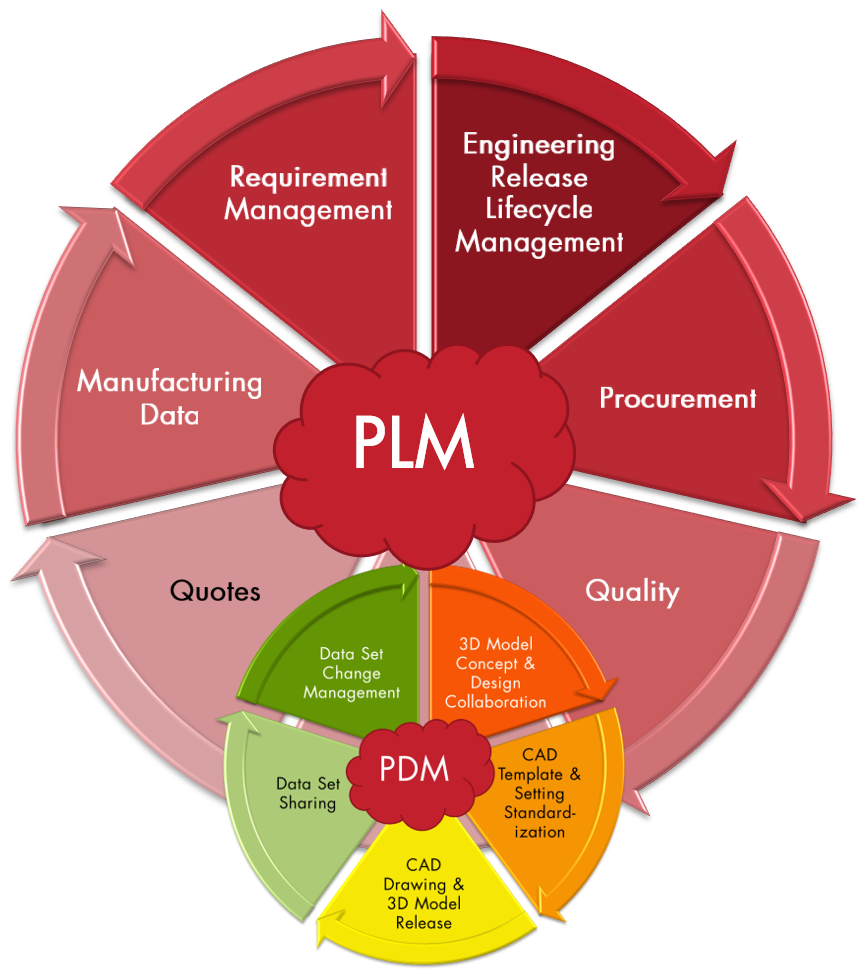 |
| Term: Quality Assurance Provisions | QAP |
|
| Definition: Documented requirements, procedures and criteria necessary for demonstrating that products conform to design requirements. |
| Term: Technical Data | |
| Definition: Recorded information of scientific or technical nature, regardless of form or character (such as equipment technical manuals and engineering drawings), [such as] engineering data, specifications, standards and Data Item Descriptions (DID). Data rights, data delivery, proprietary data use, and data management needs are included in technical data as are as maintained bills of material and system configuration by individual system identification code. Technical data does not include computer software or financial, administrative, cost or pricing, or management data or other information incidental to contract administration. |
| Term: Technical Data Package List | TDPL |
|
| Definition: An index of all documents contained in a technical data package established at a point in time. TDPLs contain a list of all specifications, engineering design data, (i.e. drawings, models, 3Di viewables, etc.), QAPs, inspection documents, packaging documents, or other documents which comprise the TDP listed by nomenclature, document CAGE code, document number, distribution statement, revision, and date. |
| Term: Type 2D TDP | |
|
Definition: 2-Dimensional Technical Data Package (2D TDP).
A 2D TDP is based on 2 dimensional engineering drawings in accordance with ASME Y14.100 series standards |
| Term: Verification | |
| Definition: An activity that assures that a product satisfies requirements. |